Keloid Treatment in Malaysia.
Medical Management of Raised & Overgrown Scars
Keloids are abnormal scars that grow beyond the original wound boundary and may continue to enlarge over time. They can cause cosmetic concern, itching, pain, or tightness and often require medical treatment rather than home remedies.
In Malaysia, keloid treatment must be performed by licensed medical practitioners in regulated medical facilities. Treatments involve prescription medications and medical procedures governed by international regulatory standards, including guidance from the U.S. Food and Drug Administration (FDA) on injectable medications used in scar management.
What Is a Keloid?
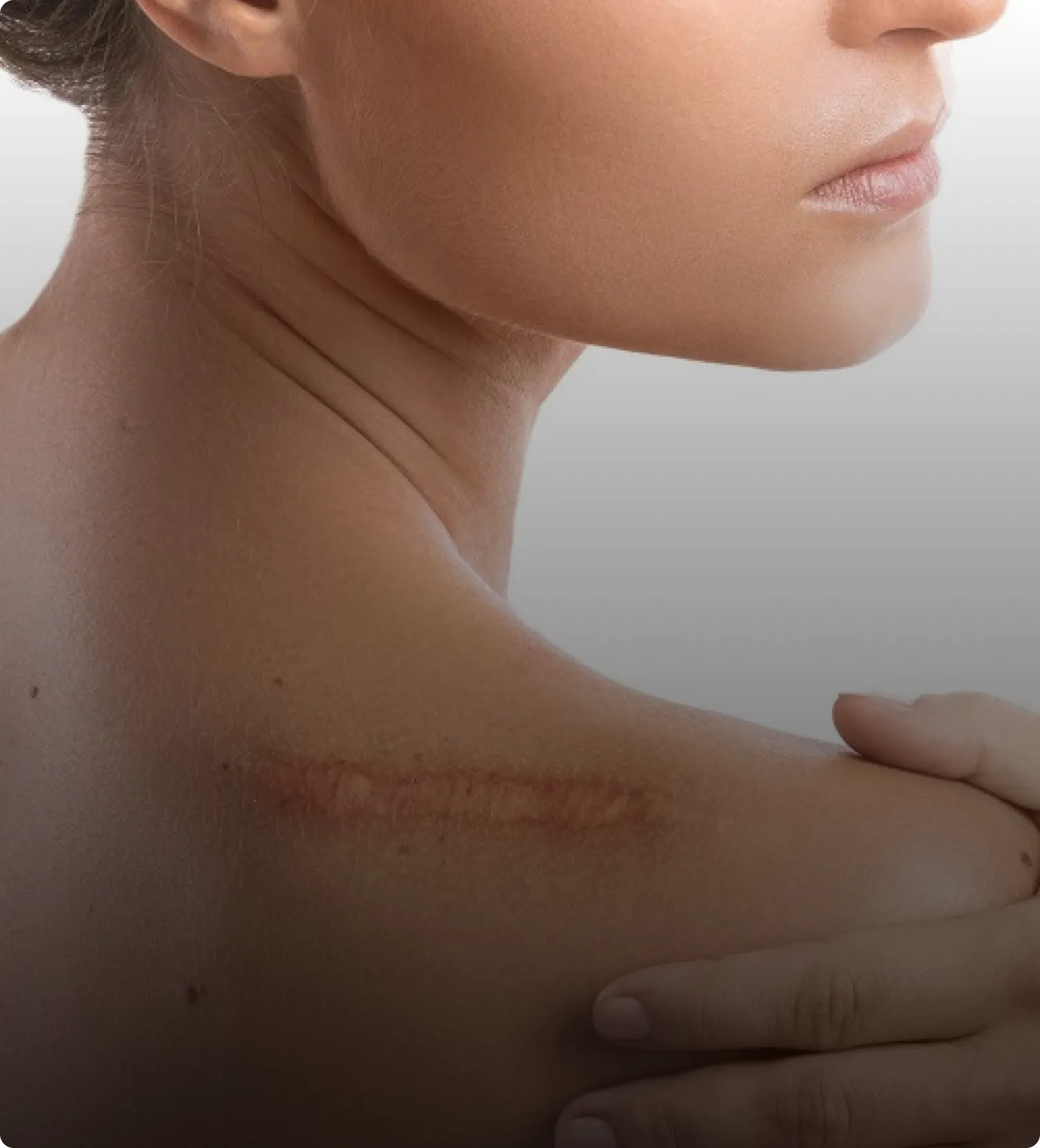
A keloid is a type of abnormal scar caused by excessive collagen production during wound healing. Major clinical institutions such as the Mayo Clinic describe keloids as benign but persistent scars that often require professional treatment to control symptoms and appearance.
Unlike normal scars, keloids have distinct characteristics that make them challenging to manage without medical intervention.
Unlike Normal Scars, Keloids:
Common Areas Affected by Keloids
Keloids commonly develop on specific body areas. They are more common in individuals with darker skin types and may have a genetic predisposition.
Chest
Shoulders
Upper back
Earlobes (after piercing)
Jawline
Surgical scars
Acne scars
Why Keloids Need Medical Treatment
Keloids don’t respond well to creams or massage alone, and the reasons come down to how keloids form and which treatments suit different scars, which is why a proper medical assessment makes such a difference.
Without medical intervention, keloids may:
Keloid Treatment Options
Treatment is individualised and may include one or more of the following approaches. According to clinical guidance summarised by MedlinePlus (NIH), combination approaches are often necessary due to the recurrent nature of keloids.
Intralesional Steroid Injections
- Reduce inflammation
- Suppress collagen overproduction
- Flatten and soften the scar
Silicone-Based Therapy
- Reduces scar thickness
- Improves texture over time
- Often used as adjunct therapy
Laser Treatment
- Reduces redness and thickness
- Improves scar appearance
- Often combined with injections
Surgical Excision
- Reserved for resistant keloids
- Always combined with adjuvant therapy
- Reduces recurrence risk
No treatment guarantees zero recurrence. Long-term monitoring is often required.
Safety, Risks, and Expectations
Keloid treatment is generally safe when performed by trained medical professionals. Possible temporary effects depend on the method used.
Possible Temporary Effects
Treatment Timeline & Results
- Improvement is gradual, not immediate
- Multiple treatment sessions are usually required
- Flattening and symptom relief often occur over weeks to months
- Maintenance or repeat treatments may be necessary
Surgical keloid excision by a plastic surgeon
Surgery isn’t where keloid treatment usually starts. Most keloids get steroid injections or laser first, and excision comes into it when a keloid is large, has been there for years, or hasn’t flattened after a proper course of those treatments. For some people, the keloid is just too bulky or uncomfortable to leave as it is, and that’s when a plastic surgeon looks at removing it.
Cutting a keloid out on its own often isn’t enough. A fresh wound can set off the same overgrowth, and the keloid can return, sometimes bigger than before. So excision is combined with steroid injection or another adjuvant therapy, such as silicone or pressure therapy, started soon after the procedure. Recurrence is still possible even with that approach, which is why follow-up visits matter as much as the surgery itself.
Earlobe keloids usually show up after piercing. They’re small enough that excision is fairly straightforward, but the earlobe is a common place for keloids to return, so aftercare gets planned carefully from the start.
Chest keloids are harder to manage. The skin there moves constantly, and that tension makes the wound heal under strain and the scar more likely to spread. Treatment tends to be slower and often uses more than one method.
Dr Soma examines the keloid, asks what’s been tried before and decides whether surgery makes sense. For raised scars that turn out not to be keloids, such as acne marks or surgical scars, scar treatment in Malaysia is usually the better route.
Who Is a Suitable Candidate?
Keloid treatment may be suitable for individuals who meet the following criteria. A medical assessment is essential to confirm diagnosis and choose the appropriate approach.
Keloid treatment cost
Keloid treatment cost varies a lot from person to person, because two people with keloids can need very different plans. A few things decide the final figure:
- Size and location: a small earlobe keloid costs less to treat than a large one on the chest or shoulder
- Number of keloids: each one is assessed and treated on its own
- Treatment method: injections, laser and surgical excision are priced differently
- Number of sessions: most keloids need repeat visits over several months
- Aftercare: follow-up injections or pressure therapy after surgery are part of the overall plan
Once Dr Soma has examined the keloid, you get a quote that matches the treatment you actually need. If you’d rather start with a message, you can get a keloid treatment quote via WhatsApp.
Get Quote via WhatsAppFrequently Asked Questions
Get answers to common concerns about keloid treatment
Scientific Evidence & References
Take control of your keloid treatment.
Keloids require medical strategy, patience, and long-term planning. With evidence-based treatment and proper follow-up, symptoms can be controlled and scar appearance significantly improved—while respecting the biology of scar formation.