

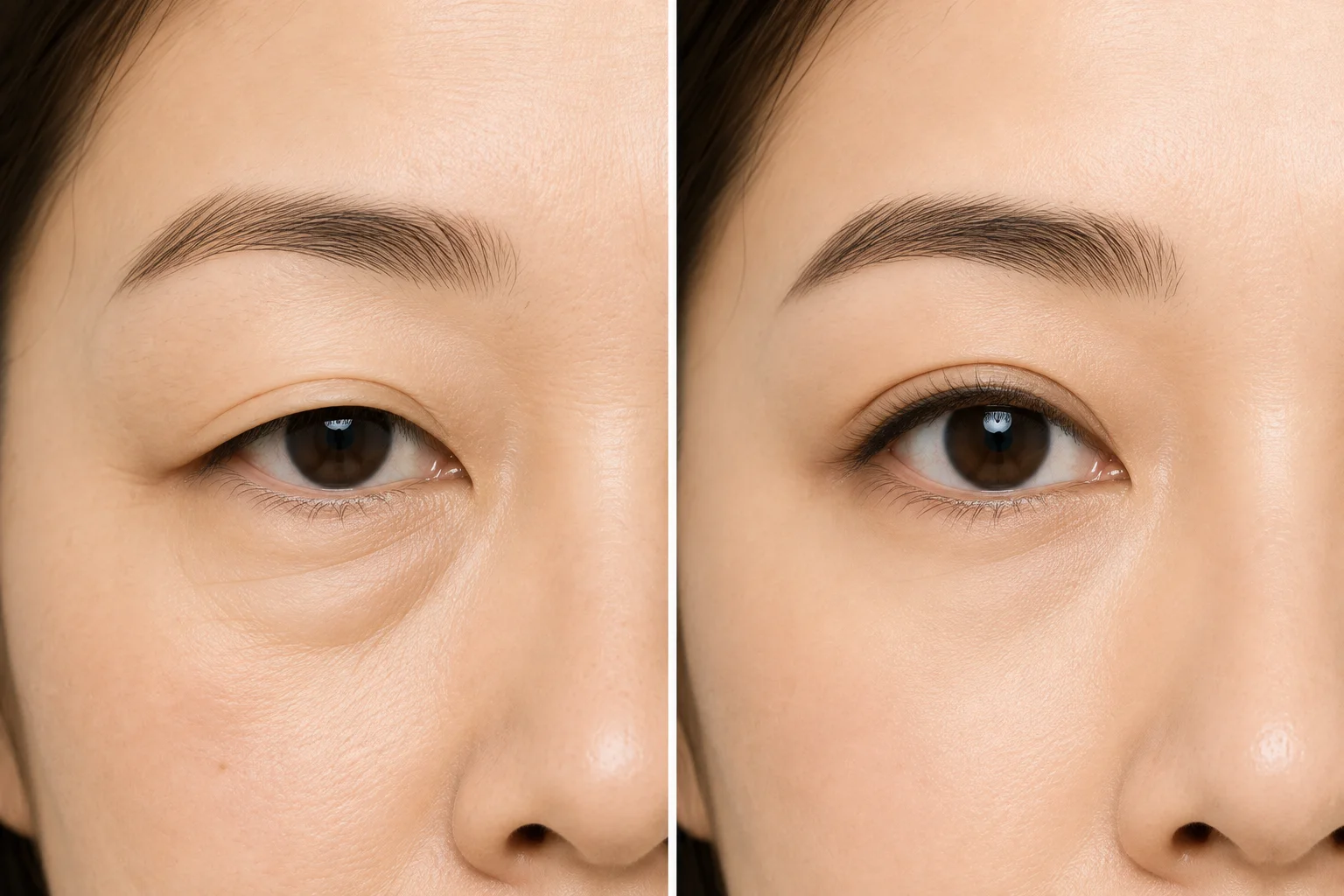
Saggy eyes, droopy eyelids, and puffy eyes are three of the most common complaints made by patients looking into their choices for facial rejuvenation, with blepharoplasty or eyelid surgery being one of the most common solutions to these problems. The procedure has been done many times before, but patients do have valid questions about how the procedure is actually done, if it is suitable for them, and the whole recovery process.
This guide will cover all the basics of blepharoplasty for Malaysian patients, including factors that take into consideration Malaysian eyelid features that might differ from other nationalities. Only an in-person consultation can confirm whether blepharoplasty, and which kind of blepharoplasty, is right for your particular pair of eyes.
Contents
-
What Blepharoplasty Actually Involves
-
Upper Eyelid Surgery
-
Lower Eyelid Surgery
-
Double Eyelid Surgery: A Related but Distinct Procedure
-
Who Tends to Be a Good Candidate
-
The Procedure: What Happens During Surgery
-
Recovery Timeline
-
Scarring: What to Expect
-
Risks and Safety Considerations
-
Combining Blepharoplasty With Other Procedures
-
Cost Factors to Understand
-
Conclusion & Frequently Asked Questions
What Blepharoplasty Actually Involves
Blepharoplasty is a cosmetic surgery which uses excessive skin, fat, and muscle from the area of the eyelids. Blepharoplasty may be performed in the upper or lower eyelid, or both eyelids, based on what the client desires. The purpose of this surgery is to refresh the appearance of the patient through correction of heaviness, puffiness, or drooping of the eyelids, which is usually the first place to show signs of aging.
It should be mentioned at this point that blepharoplasty only deals with the eyelids and does not address such problems as heaviness of the forehead or brows position
Upper Eyelid Surgery
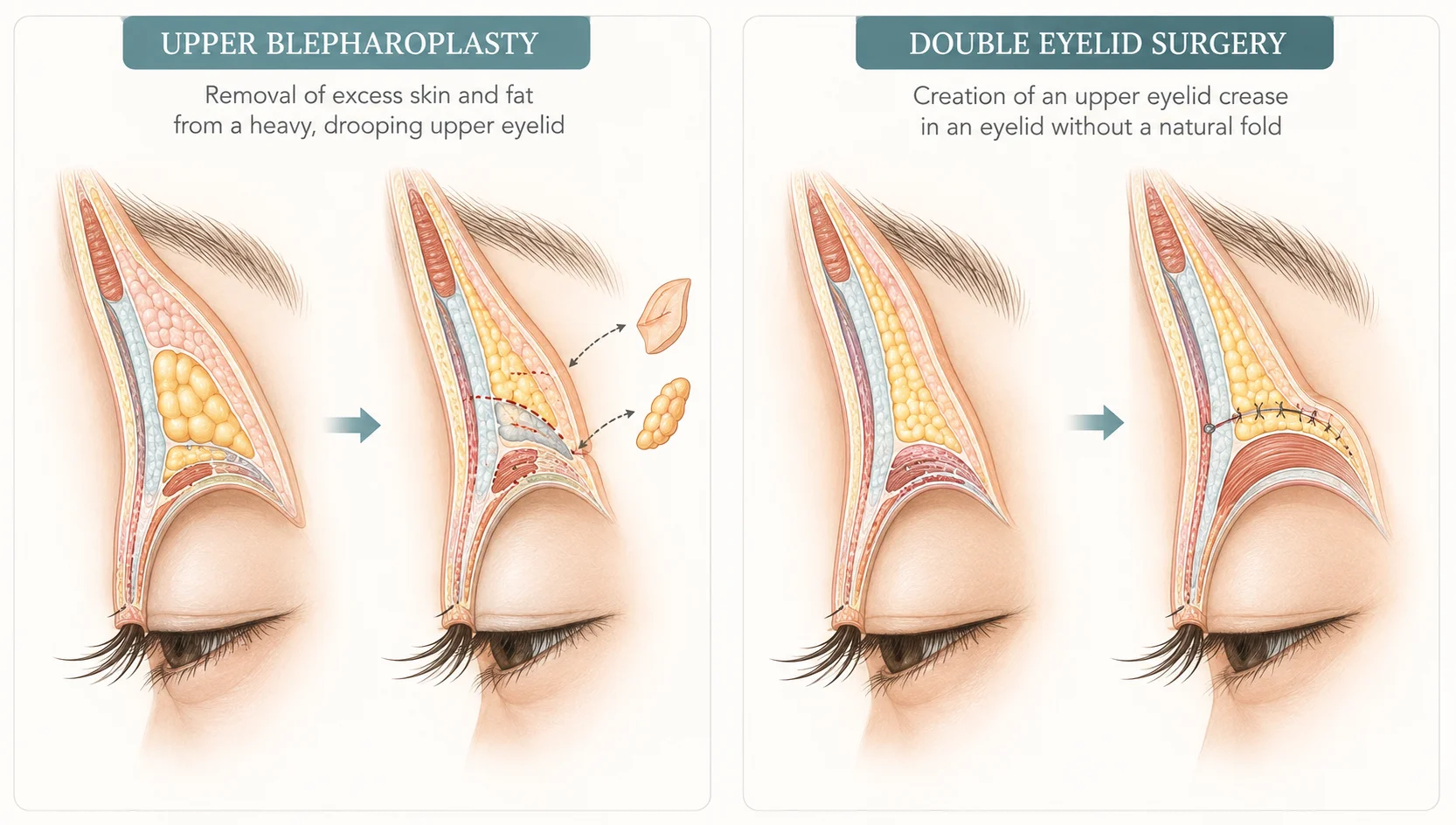
Upper eyelid blepharoplasty deals with the problem of excess or drooping skin on the upper eyelids which may make one appear as though there's too much weight there resulting in a tired look, and in severe cases, affecting the field of vision from the upper eyelids.
Key facts about upper eyelid blepharoplasty:
-
Removes excess skin and, at times, some of the fat which has caused this heaviness.
-
The cut is made right into the fold of the upper eyelid where it can be hidden when it heals.
-
It can deal with both the cosmetic and severe cases whereby the vision is affected.
Lower Eyelid Surgery
Lower eyelid blepharoplasty treats issues such as under eye puffiness (which is often caused by fat pockets), fine wrinkles, and looseness in the skin under the eyes.
Key facts about lower eyelid blepharoplasty:
-
Concerns with puffiness which may result from fat deposits in the lower eyelid by either removing it or relocating it as necessary.
-
Also concerned with loose skin of the lower eyelid.
-
Incisions are usually made either right below the lash line or even inside the lower eyelid depending on the particular procedure being performed.
Double Eyelid Surgery: A Related but Distinct Procedure
It is important to clarify the difference between blepharoplasty and double eyelid surgery because some people tend to use the terms as one and the same in certain parts of the world, especially in Malaysia and throughout Asia.
Double eyelid surgery aims to form or improve the formation of the upper eyelid crease for people who do not have it naturally or have an inconspicuous upper lid crease. This is different from regular blepharoplasty, which involves the removal of excessive skin or fat rather than the creation of an eyelid crease.
Who Tends to Be a Good Candidate
Good candidates for blepharoplasty usually include individuals who:
-
Have excess or drooping skin in the upper or lower eyelids
-
Have heaviness and hooding that may impact their appearance or, in some instances, their upper vision
-
Have puffiness under the eyes due to fat bulging and not from anything else
-
Are in relatively good health and do not have any underlying eye problems that need evaluation by the doctor
-
Have realistic expectations from the surgery
A good consultation process, which includes an examination of eye health, is crucial in deciding candidacy because there are some eye problems that need identification.
The Procedure: What Happens During Surgery
-
Consultation & Assessment - The procedure involves an examination of your eyelids, a discussion of your issues, and perhaps an evaluation of your overall eye health
-
Anesthesia - Blepharoplasty surgery is commonly done under local anesthesia with sedation; however, this may depend on the type and combination of surgery
-
Incision Placement - Incisions are precisely placed either in natural lines or hidden areas, depending on whether you are having upper, lower, or both types of blepharoplasty
-
Tissue Modification - Removal or relocation of excess skin and fat occurs
-
Closure - Incisions are then sewn up with very fine sutures that are usually removed after a week
Recovery Timeline
First few days: Most of the swelling and bruising usually occur in this period, and cold compress is recommended to deal with this. It is advised that you keep your head elevated even when sleeping, which helps to minimize swelling.
First week: The sutures, in case they are used, are removed at this time. There will be a decrease in swelling and bruising in this period, but bruising may still be seen after one week.
Second week: Most of the patients find themselves ready to go back to work and normal routines, especially wearing makeup to cover bruising.
Subsequent weeks and months: Residual swelling is minimized progressively in the subsequent weeks and months, and final settled appearance of eyelids usually emerges in subsequent weeks to months.
Scarring: What to Expect
The incision sites for blepharoplasty procedures are normally very well hidden due to the fact that they fall on natural eyelid folds or are made at the lash line. In most cases, once healed, the scars will become nearly impossible to spot after some months.
Risks and Safety Considerations
Blepharoplasty may be performed with safety if done by a professionally trained surgeon, but there are always certain risks that come with any kind of surgery, including risk of infection, risk of bleeding, and risks of complications during anesthesia. If one considers the risks related to blepharoplasty specifically, these risks will include eye dryness, irritation while healing from surgery, and changes in position/function of the eyelids. Conducting a proper assessment before the surgery is vital to manage these risks.
Malaysian Patient Considerations
Diverse eyelid features
The different ethnic groups in Malaysia, namely Malay, Chinese, Indian, among others, show real differences in terms of their natural eyelid features, especially those of natural fold existence and fat deposits in the eyelids. This is what makes individual assessment of eyelid surgery cases much more important than any generalized method.
Climate and post-surgery comfort
The humid weather conditions of Malaysia may sometimes make any swelling experienced after surgery even more uncomfortable. It will be important for you to stay in cool environments and adhere to your surgeon's recommendations about post-surgical care to ensure your comfort in the healing process.
Sun and eyes protection in the healing process
In view of the constant exposure to sunlight in Malaysia, it will be important for you to wear the right sunglasses when allowed to by your doctor.
Combining Blepharoplasty With Other Procedures
It may be possible for blepharoplasty to be used in conjunction with other facial surgeries like a brow lift or a facelift in the case where a person's cosmetic concerns are not limited to their eyelids. Of course, whether this should occur would depend on the individual and the opinion of the surgeon.
Cost Factors to Understand
The cost of blepharoplasty can be different based on whether the procedure is done on the upper or lower eyelid, or on both lids, or when combined with other treatments, among other factors. To get a more accurate quotation of the treatment price based on your needs, you should conduct an in-person consultation.
Conclusion
The blepharoplasty procedure is a very established one and one which will be able to significantly freshen up the appearance of heavy or tired looking eyes. Having knowledge of what the procedure entails, the expected recovery period, and what separates it from other similar procedures such as double eyelid surgery is an important step going into a consultation.
With the different eyelid structures in Malaysia, having an individualised assessment is critical. The right treatment for you will depend on your own anatomy and needs.
Frequently Asked Questions
How long does blepharoplasty surgery take?
This is variable based on whether upper, lower or both eyelids are operated on, as well as whether it is in combination with other operations, but generally speaking, it is a fairly efficient outpatient procedure.
Will blepharoplasty affect my vision?
If you're having the surgery done because you have extra skin blocking your upper vision, the operation is expected to help you with this problem. As a rule, if the surgery is for purely aesthetic reasons, vision itself will not be affected.
How long until the swelling goes down?
Most noticeable swelling should subside within about one or two weeks, although some amount of swelling may persist for several more months until the final results are achieved.
Is blepharoplasty the same as double eyelid surgery?
No, they are connected, but different. While blepharoplasty involves the removal of extra skin or fat, double eyelid surgery implies the formation of an eyelid crease. Both these goals can be pursued simultaneously, which may be discussed at your consultation.
Will I have visible scars after eyelid surgery?
The incision is made either in the natural crease of the eyelid or in hidden spots, and for most patients, the scars eventually become invisible.
Can I combine blepharoplasty with other facial procedures?
Yes, this is very true, especially in cases like brow lift surgery or face lift surgery where the patient’s problems are not limited to the eyes. It will be the surgeon’s responsibility to determine this.