
To lose weight through changes in diet and exercise, bariatric surgery, or a mixture of the two is an accomplishment, but this process will leave you with loose and excess skin that cannot be fixed through diet and exercise alone. Body lift surgery is performed specifically to solve this problem that people experience after losing large amounts of weight.
This article is aimed at giving a clear idea of body lift surgery, the reasons for loose skin, and what you need to know before your first consultation if you are in Malaysia.
Why Major Weight Loss Leaves Excess Skin
The skin has a natural elasticity that enables it to stretch as well as retract to some extent. Nevertheless, where someone has been overweight for a considerable period of time and loses a lot of weight either through lifestyle changes or bariatric surgery, the skin might have already overstretched to the point where it cannot retract on its own. This causes loose hanging skin, which happens mostly in the areas of the stomach, thighs, arms, and sometimes chest and back.
It does not matter how much effort was put into losing the weight; it is just a simple fact about the elasticity of skin that is very common in people who have managed to lose weight successfully.
What "Body Lift" Actually Means
“Body lift” is a generic term used either for one surgery done all together for the whole lower part of the body including the abdomen, flanks, buttocks, and the outer thighs; or for the combination of several surgeries done individually for the different parts according to the needs of the patient. This kind of procedure, just like the mommy makeover, is customized for each patient.
Common Areas Addressed
The type of body lift surgery will depend on individual requirement, but may include any of the following:
Abdomen – removal of excess skin in this region, usually along with muscle repair in cases where required
Flanks and lower back – treatment of the excess skin, which folds around the sides and the back region
Buttocks and outer thighs – lifting and tightening of the skin in this region, which tends to sag a lot after significant weight loss
Inner thighs – treatment of excess skin, particularly the inner thigh, often treated separately as thigh lift surgery
Upper arms – treatment of excess hanging skin that is commonly known as “bat wings,” often treated separately as arm lift surgery
Chest region – treatment of excess skin in the chest region, affecting both males and females after significant weight loss
Lower Body Lift Explained
The lower body lift or belt lipectomy is a surgery that combines work on the abdomen, the flanks, and the buttocks through a surgical incision which encircles the lower body. Patients who choose this surgery usually have excess skin in all these areas because this surgery is a more comprehensive method than undergoing each surgery separately.
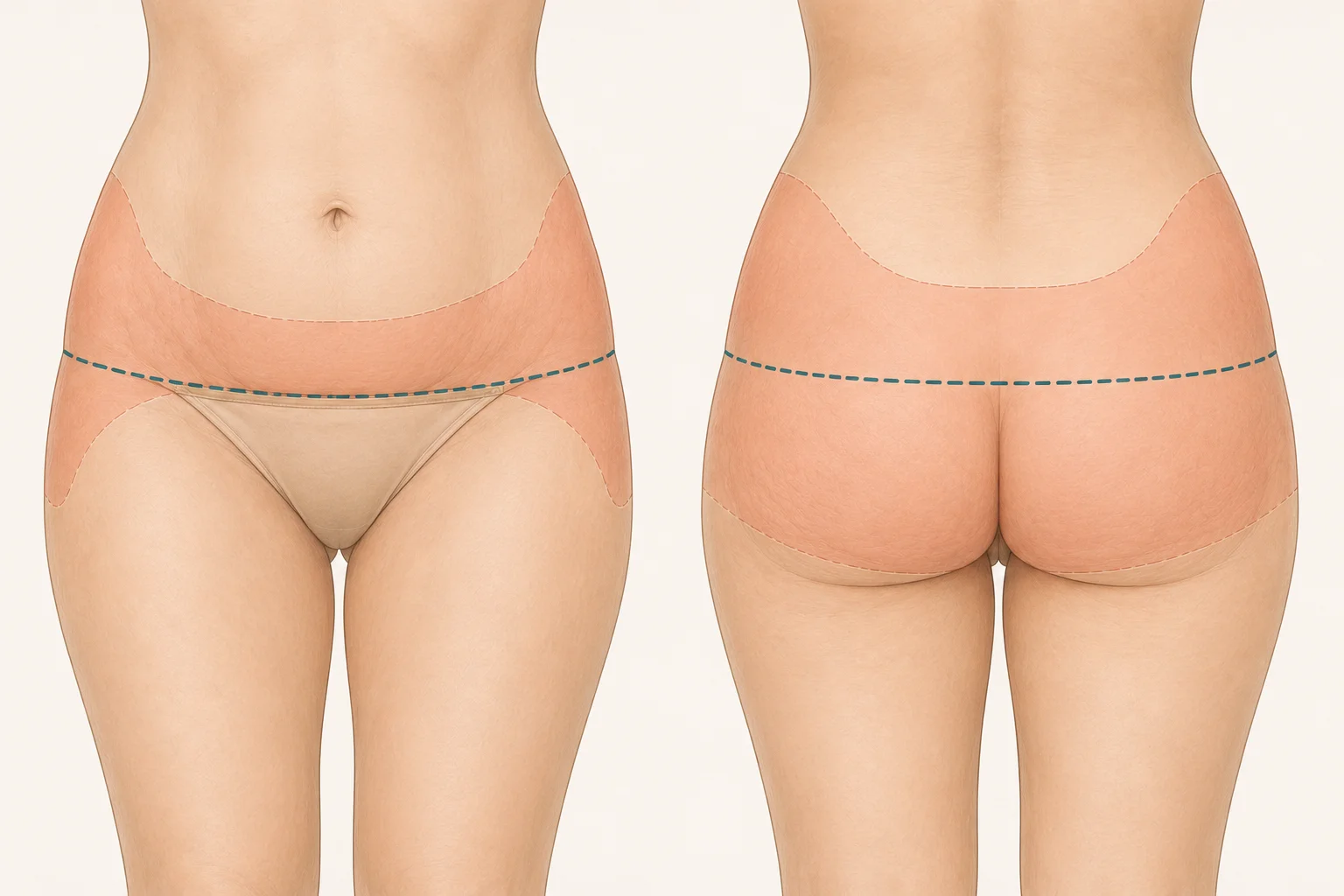
Important facts about lower body lifts:
-
Combines work on several parts of the body – abdomen, flanks and buttocks – into one surgical procedure
-
Takes more time in surgery and recovery period than just working on a single part of the body
-
Usually undertaken by those patients who have excess skin encircling their lower body
Upper Body Lift Considerations
For those individuals who have considerable amounts of extra skin in the upper body including the arms, chest, and the upper back regions, these areas are generally dealt with separately, even though in relation to the rest of the body. This is because they require different methods of surgery and different surgical markings. Most patients go for body sculpting in phases, starting with the lower body and then moving on to the upper body in another surgery.
Is It One Surgery or Multiple
Because of the vast nature of the body lift surgery – especially where there is excess skin in several parts of the body – the surgery is usually done in stages, whereby everything cannot be done at once. The procedure normally makes recovery easier and safe, and also provides the surgeon the chance to evaluate the outcome of each stage before moving to another one.
The surgeon will normally formulate an appropriate staging plan considering the amount of excess skin and how much can be removed in one surgery.
Who Tends to Be a Good Candidate
Potential candidates for the body lift procedure usually include individuals who:
-
Are overweight or obese and have already achieved their ideal weight after a considerable period of time, usually months or even a year
-
Have a well-founded understanding of the staged procedure involved in the process of comprehensive body contouring
-
Are physically healthy, without any medical problems that could put their safety at risk during the surgery
-
Maintain a satisfactory nutritional state, especially important for those patients who have had bariatric surgery in the past
Timing: When to Consider Body Lift Surgery
Time is crucial for body lift procedures. The majority of doctors advise patients to postpone the procedure until their weight becomes relatively stable, which normally takes several months or even a year, because further weight changes will negatively impact the outcome of the operation. If a patient has had bariatric surgery in the past, this usually means that it is necessary to wait until the stage of fast weight loss is over and the weight stabilizes.
Another important aspect is the nutritional status of the patients, especially when we talk about bariatric surgery patients because good nutrition is needed for proper healing of the wound.
The Consultation and Planning Process
The body lift consultation is expected to consist of the following steps:
-
Discussing your weight loss story: the amount of weight you have lost and the way it was done and for how long your weight has been stable,
-
Physical examination: assessing the degree and distribution of excess skin;
-
Nutritional and medical evaluation, especially important in the case of bariatric surgery patients;
-
Treatment plan discussion: deciding which body parts need treatment and whether one major operation will be needed or several stages are required;
-
Expectations setting: understanding the whole process and its results.
Recovery Considerations
Recovery from body lift surgery, specifically a comprehensive lower body lift, is typically a lot more involved than that of many other body contouring operations because of the larger area involved.
-
The initial recovery process usually consists of several weeks of limited activity and a longer time before the patient can engage in more rigorous physical activities.
-
It is likely that drains will be used after more extensive surgeries such as the lower body lift for about a week.
-
The use of compression garments is common for a prolonged period of time.
-
Considering the possibility of a staged body contouring operation, one should consider the likelihood of having multiple recovery phases.
Scarring: What to Expect
Body lift surgery, based on how much extra skin is removed during the procedure, entails bigger incisions compared to most cosmetic surgeries. It is important to note that doctors try to make incisions such that they are hidden underneath clothes, but the patient needs to understand the reality of scars when it comes to removing that much skin. Over time, the scars become less visible, but they will always be there.
Risks and Safety Considerations
In terms of the risks associated with body lift surgery, apart from the usual complications common to all surgeries like infections, bleeding, and side effects from anaesthesia, there are some concerns that are specific to large scale skin excision surgeries such as the difficulty of wound healing, especially when the patient has any deficiencies due to past massive weight loss. That is why nutritional assessment and staging become very important in such cases.
Cost Factors to Understand
The price of body lift depends much on what kind of areas would need to be treated, either a complete lower body lift or some other more selective procedures will have to be done, as well as if the procedure needs to be staged. In light of this fact that a body lift surgery can be quite extensive and also staged, the final price can reach significant heights.
Conclusion
Body lift surgery following weight loss surgery is an actual issue that needs to be addressed by individuals who have gone through major weight loss surgery because of the problems associated with excess skin following major weight loss surgery. It is important for one to know that body lift surgery is not done in one process but follows stages depending on how much excess skin one has. This is why a proper consultation is very important.
Frequently Asked Questions
How long should I wait after major weight loss before considering a body lift?
Surgeons normally suggest waiting until your weight has remained stable for several months to even a year so that you can avoid affecting the results through further changes in your weight.
Do I need to address my whole body in one surgery?
No, and it is not always suggested. The procedure of comprehensive body contouring is done through several operations at different stages of your recovery process.
Will I have significant scarring after a body lift?
As you will be having lots of loose skin removed during this surgery, then you have to expect to have some larger incisions compared to the other surgeries. Incisions will normally fade over time, but expect some permanent scars that will fade over time.
Is body lift surgery safe for patients who've had bariatric surgery?
Yes, as nutrition plays an important role in the wound healing process, which is a particular consideration for this patient group.
What's the difference between a lower body lift and addressing the abdomen alone with a tummy tuck?
A low body lift surgery targets the combination of all three areas (abdomen, flanks, and buttocks), whereas tummy tuck targets the abdomen alone. This will depend on how far out the excessive skin goes beyond just the abdominal region.