
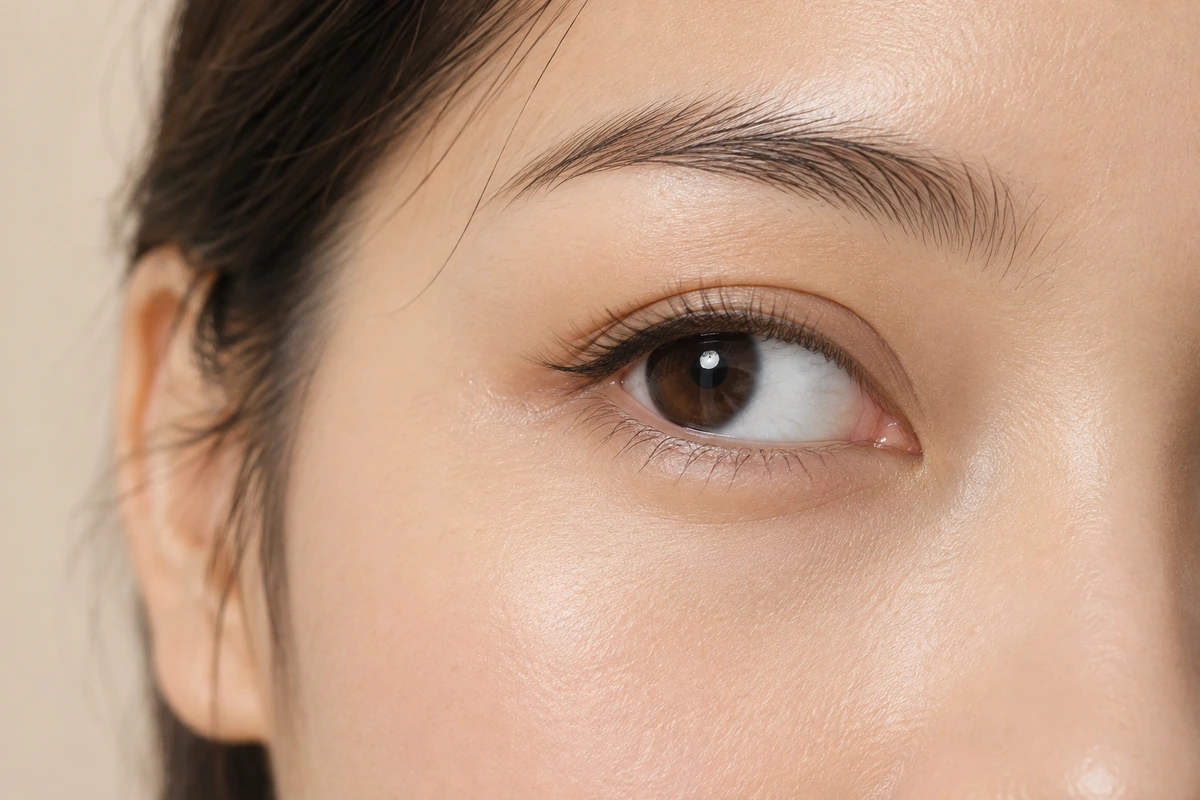
Double eyelid surgery, also called Asian blepharoplasty, creates a crease in the upper eyelid for people born with a single lid or with a crease that is faint or uneven. It is one of the most requested facial procedures in Malaysia, and the first decision most patients face is the method. The incisional technique cuts and reshapes the lid, while the non-incisional or suture technique creates the crease with stitches alone. Each has clear advantages, and the right one depends mostly on your eyelid anatomy.
Reviewed by: Surgical Team, Dr Soma Plastic Surgery | Reviewed: September 2026
What the Crease Actually Is
A double eyelid crease forms where the muscle that lifts the eyelid attaches to the skin. In people with a single eyelid, this attachment sits lower or is absent, so the skin folds smoothly without a crease. Both surgical methods work by creating a new connection between the lifting muscle and the skin at the desired height.
The height, shape and depth of the crease are planned before surgery. Some patients prefer a low, subtle parallel crease. Others want a tapered crease that follows the inner corner of the eye. This is discussed and marked carefully in the consultation.
Comparing the Two Methods
| Feature | Non-Incisional (Suture) Method | Incisional Method |
|---|---|---|
| Permanence | Less permanent; crease may fade over time | More permanent; crease secured directly to muscle |
| Visible scar | Tiny puncture marks only, fades quickly | Fine scar hidden in crease, usually not visible once healed |
| Recovery time | Around one week | Two to three weeks for initial swelling |
| Ability to remove skin or fat | No skin or fat is removed | Yes, excess skin and fat can be addressed |
| Suitable anatomy | Thin lids, minimal fat, no excess skin | Thick or puffy lids, excess skin, older patients |
| Revision possibility | Can be repeated or converted to incisional | Revision is possible but more involved |
The Non-Incisional Suture Method
The suture method places several small stitches through tiny punctures along the planned crease line. The stitches anchor the skin to the deeper muscle, and the crease forms where they sit. No skin is removed and there is no continuous incision.
This approach is quick, usually under an hour, and recovery is faster. Swelling is milder and most people look presentable within about a week. It suits younger patients with thin eyelid skin, little fat and no excess skin, because there is nothing that needs removing.
The main drawback is permanence. The stitches can loosen over time, and the crease may fade or disappear, particularly in people with heavier lids. It is generally considered less permanent than the incisional method, although it can be repeated or later converted to an incisional procedure.
The Incisional Method
Incisional eyelid surgery Malaysia involves a fine cut along the planned crease line. Through this incision, the surgeon can remove excess skin, trim fat that makes the lid puffy and secure the crease directly to the muscle with deep sutures. The incision is closed so the scar sits hidden inside the new fold.
Because it addresses skin and fat as well as the crease, this method is more versatile. It is the better choice for thicker eyelids, puffy lids with more fat, older patients with loose skin, and anyone who has had a suture procedure that faded or failed.
Recovery takes longer. Swelling can be noticeable for two to three weeks and the crease may look higher than intended at first before settling over one to three months. Stitches are removed around a week after surgery.
Which Double Eyelid Surgery Method Suits You
The choice usually comes down to these points:
- Thin lids with minimal fat and no excess skin: suture method is often suitable.
- Thick or puffy lids: incisional method gives a cleaner, lasting result.
- Excess skin or drooping: incisional method, sometimes combined with a small skin removal.
- Wanting the most durable result: incisional method.
- Wanting minimal downtime and accepting some risk of fading: suture method.
Some patients in Malaysia choose the suture method first to see whether they like having a crease, then move to the incisional method later for a permanent version. That is a reasonable path as long as expectations are clear from the start.
Safety and Where It Is Done
Both methods are usually performed under local anaesthesia with or without light sedation in an accredited hospital setting. Risks include asymmetry, a crease that is too high or too low, infection and, with the suture method, loss of the crease over time. A surgeon experienced in eyelid work will plan the crease height to suit your eye shape and brow position rather than applying one template to everyone.
If you are considering double eyelid surgery and are unsure which method fits your lids, Dr Soma Plastic Surgery in Subang Jaya assesses skin thickness, fat and crease shape in consultation before recommending an approach.
Frequently Asked Questions
Will the scar be visible?
With the incisional method the scar lies inside the crease and is usually hard to see once healed. The suture method leaves only tiny puncture marks that fade.
How long does the suture method last?
Results vary. Some people keep the crease for many years, while others notice fading within a few years, especially with thicker lids.
Can I choose the crease height?
Yes, within limits that suit your anatomy. The surgeon will show you options and explain what will look natural on your face.
This article is for general information only. Please consult a qualified surgeon for advice specific to your situation.