
Many Malaysians who want a higher bridge or a more refined tip find themselves weighing two very different options. One is a quick, non-surgical thread procedure done in a clinic room. The other is surgical rhinoplasty in a hospital. This article explains how the two compare and why they are not interchangeable choices for the same goals.
Reviewed by: Surgical Team, Dr Soma Plastic Surgery | Reviewed: September 2026
What Malaysian Noses Usually Need
Across Malay, Chinese and Indian heritage, the concerns brought to a consultation tend to be similar: a low or flat bridge, a rounded or bulbous tip, wide nostrils, and thicker skin that hides definition. Unlike Western rhinoplasty, which often removes tissue to reduce a hump, Asian rhinoplasty Malaysia usually adds structure to build height and shape.
This matters because adding structure is something the two procedures do very differently, with very different degrees of permanence and precision.
How a Nose Thread Lift Works
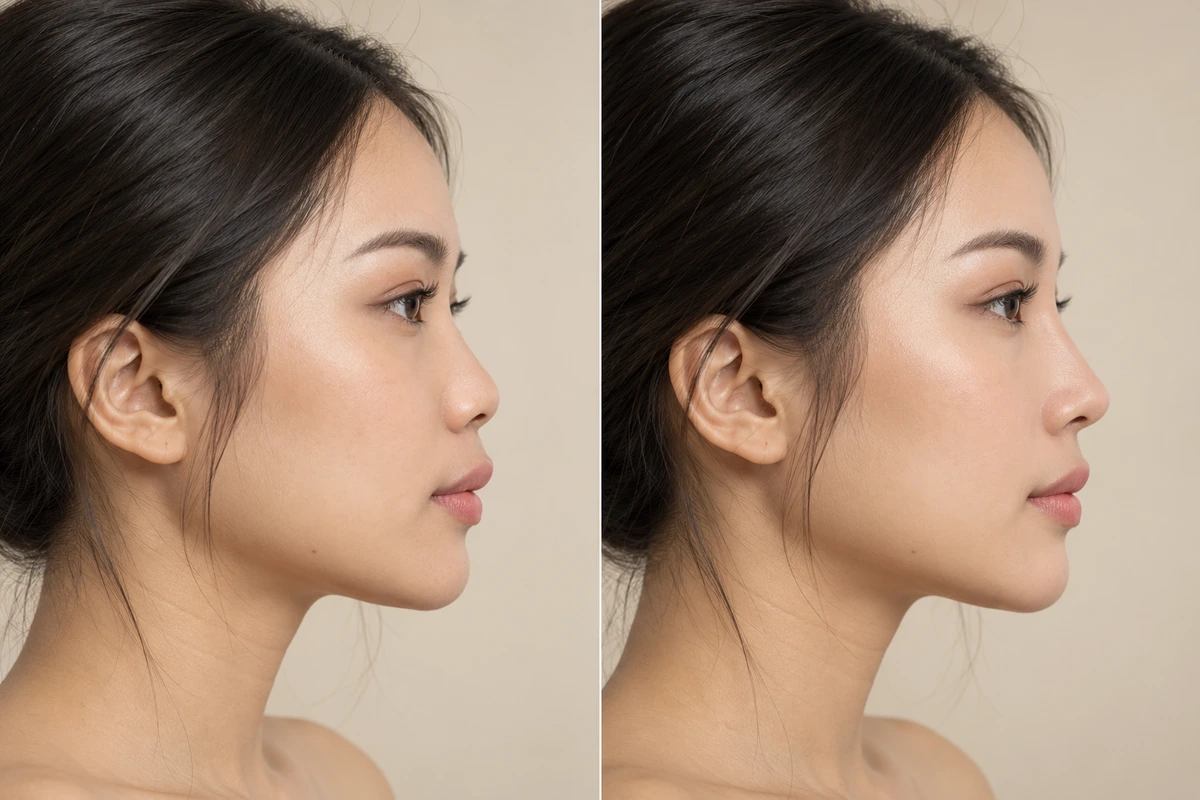
A nose thread lift uses dissolvable threads, usually made of PDO or a similar material, inserted through a small entry point at the tip. Several threads are placed along the bridge and sometimes into the tip to create a modest increase in height and a slightly straighter appearance. The procedure takes around 30 to 45 minutes under local anaesthesia.
Results are temporary. The threads dissolve over time, and the effect typically lasts somewhere between one and two years, after which the nose gradually returns to its previous shape. The procedure needs to be repeated to maintain the result.
Limitations and Risks of Nose Thread Lifts
A nose thread lift is a non-surgical option with a specific and limited range of outcomes. Patients should understand these limitations clearly before proceeding.
In terms of what it can achieve: a thread lift can add a small amount of bridge height, typically a few millimetres. It cannot significantly alter the shape of the nose tip, cannot narrow a wide or bulbous tip, cannot correct a deviated septum and cannot widen or narrow the nostrils. It produces a subtle change, not a structural reshaping.
The risks associated with thread lifts of the nose include:
- Thread visibility or palpability under the skin, particularly in patients with thinner nasal skin.
- Thread extrusion, where a thread works its way to the surface and requires removal.
- Infection at the insertion point.
- Asymmetry, where threads settle unevenly on the two sides.
- Skin irregularity or dimpling over the treatment area.
- In rare but serious cases, vascular complications if a thread or needle is placed near a blood vessel, which can affect circulation to the skin.
These risks are not a reason to avoid the procedure entirely, but they are a reason to choose a practitioner experienced in nasal anatomy and to understand that the procedure carries real, if uncommon, adverse outcomes.
A further consideration is that repeated thread procedures can create internal scar tissue that complicates any later surgical rhinoplasty. Patients planning eventual surgery should factor this in.
How Rhinoplasty Works
Surgical rhinoplasty Malaysia reshapes the nose permanently. For a low bridge, the surgeon may place a silicone implant or a graft of your own cartilage from the septum, ear or rib. For a wide tip, cartilage is trimmed, sutured and supported with grafts to create definition. Nostrils can be narrowed with small incisions at the base.
The operation is performed in an accredited hospital setting, usually under general anaesthesia, and takes two to four hours depending on what is done. A splint stays on for about a week, and swelling settles over months, with final refinement of the tip taking up to a year in patients with thicker skin.
Who Suits Each Option
Nose thread lifts may suit patients who want a minor improvement in bridge height, have no significant tip or nostril concerns, are not ready for surgery, and understand clearly that the result is temporary and will need repeating.
Surgical rhinoplasty is better suited to patients who want a meaningful and lasting change, who have tip, nostril or septal concerns that threads cannot address, or who have previously had thread procedures and want a more durable result. It is also the appropriate path for anyone with a breathing problem alongside cosmetic concerns.
One point worth being clear about: multiple thread sessions do not accumulate into a surgical result. If your goal requires structural change, threads are a temporary measure, not a step towards that change.
Making the Decision
The best way to settle the nose thread lift vs rhinoplasty question is a proper assessment of your bridge, tip, skin thickness and goals. Understanding both what a procedure can achieve and what it cannot is the basis of a well-informed choice.
Frequently Asked Questions
Can a nose thread lift go wrong?
Possible issues include threads becoming visible under thin skin, infection, asymmetry or thread extrusion. Vascular complications, though rare, are a known risk with any nasal injection or insertion procedure. Choosing an experienced practitioner reduces but does not eliminate these risks.
Will rhinoplasty look natural on an Asian face?
Yes, when planned for your features rather than copying a Western profile. The aim is balance with the rest of your face.
Can I have rhinoplasty after threads?
Usually yes, once the threads have dissolved and sufficient time has passed. Tell your surgeon exactly what was done and when, as internal scar tissue may affect surgical planning.
Medical References
- Suh DH, et al. Complications of thread lifting. Dermatologic Surgery. 2019;45(12).
- Kim BJ, et al. PDO thread lifting of the nose: outcomes and complications. Journal of Cosmetic and Laser Therapy. 2020.
- American Society of Plastic Surgeons. Rhinoplasty: Risks and Safety Information. www.plasticsurgery.org
This article is for general information only. Please consult a qualified surgeon for advice specific to your situation.