
Losing a large amount of weight, whether through diet, exercise or bariatric surgery, is a major achievement. For many people, though, the celebration is followed by a new frustration: loose, hanging skin on the inner thighs that rubs, chafes and makes clothing uncomfortable. A thigh lift Malaysia removes this excess skin and tightens the tissue underneath. This article explains what the procedure involves, where the scars sit and when it is sensible to go ahead.
Reviewed by: Surgical Team, Dr Soma Plastic Surgery | Reviewed: September 2026
Why Skin Does Not Bounce Back
Skin stretches to accommodate weight, and after a big loss it often cannot shrink back to match the new shape. Elasticity depends on age, genetics, how long the weight was carried and how much was lost. The inner thigh is particularly prone to sagging because the skin there is thin and gravity pulls it downwards.
Exercise builds muscle but does not remove excess skin. Creams and non-surgical tightening devices can help mildly loose skin, but they cannot address the significant folds seen after major weight loss. Surgery is the only reliable option at that stage.
Types of Thigh Lift
The technique is chosen based on where the loose skin sits and how much there is.
A medial or inner thigh lift removes skin from the upper inner thigh through an incision hidden in the groin crease. It suits people whose laxity is mainly at the top of the thigh.
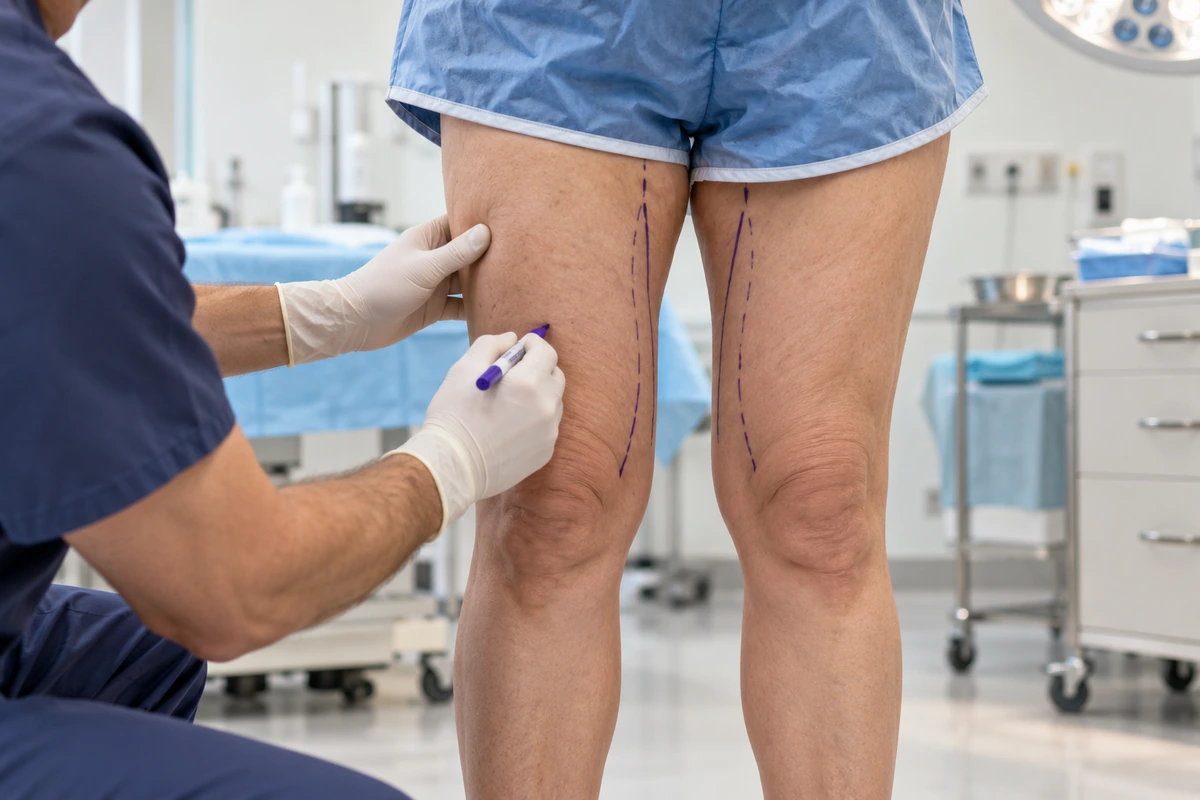
An extended or vertical thigh lift adds an incision running down the inner thigh towards the knee. It removes far more skin and is usually needed after major weight loss, when the laxity extends along the whole length of the thigh.
Liposuction is sometimes combined with either approach to reduce remaining fat before the skin is tightened.
Where the Scars Will Be
Honest discussion about scars is essential because a thigh lift after weight loss trades loose skin for a permanent scar. With a medial lift, the scar sits in the groin fold and is generally hidden by underwear or swimwear. With a vertical lift, the scar runs along the inner thigh and is visible when the legs are apart or in shorts, although it faces inward and is not obvious when standing.
Scars fade over 12 to 18 months but never disappear entirely. Most patients feel the trade-off is worthwhile because the chafing, rashes and discomfort of hanging skin are gone. Scar care, including sun protection and keeping the wound moisturised in the healing phase, helps the final appearance. Avoiding tension on the wound in the early weeks is also important. The full detail of scar management and what to expect is something to discuss in your consultation, as individual healing varies.
When to Have a Thigh Lift After Weight Loss
Surgeons generally recommend that your weight has been stable for at least six months before a thigh lift. There are practical reasons for this:
- Further weight loss after surgery creates new loose skin and partially undoes the result.
- Weight gain stretches the tightened skin and scars.
- A stable weight suggests your nutrition and habits are settled, which supports healing.
Stable weight before surgery is one of the most important factors in achieving a good and lasting result. It also gives the surgeon a clear picture of what skin remains truly excess rather than what might still reduce.
After bariatric surgery, most surgeons also want to confirm that nutritional markers such as protein, iron and vitamin levels are healthy, since deficiencies slow wound healing significantly. Protein in particular plays a key role in tissue repair, and low levels increase the risk of wound breakdown or infection. Blood tests before surgery help confirm you are in a good position to heal.
Smoking is another factor that must be discussed honestly. Smoking reduces blood flow to the skin and significantly increases the risk of wound-healing problems after any body contouring procedure. Most surgeons ask patients to stop smoking for a minimum of four to six weeks before and after surgery, and some set longer timelines depending on the procedures planned.
Recovery and Results
The procedure is performed in an accredited hospital setting under general anaesthesia and usually takes two to four hours. Some patients stay one night. Drains may be used briefly. Compression garments are worn for several weeks, and walking is encouraged early to reduce clot risk.
Expect swelling and bruising for two to three weeks. Sitting and walking are uncomfortable at first because the incisions sit in the groin, so most people take about two weeks off work and avoid strenuous exercise for six weeks. Wound care in the groin area needs attention, as the fold is prone to moisture.
Many patients have thigh surgery as part of a wider body contouring plan that may also include a tummy tuck Malaysia or an arm lift. Sequencing these procedures safely is something to work through with your surgeon, as operating time must be managed carefully. If you have reached a stable weight and are considering a thigh lift after weight loss, Dr Soma Plastic Surgery in Subang Jaya can assess your skin and discuss which technique suits your body.
Frequently Asked Questions
Will a thigh lift remove cellulite?
It can improve the appearance of cellulite by tightening the skin, but it is not a cellulite treatment and some dimpling may remain.
Can I combine a thigh lift with other procedures?
Often yes, although the surgeon will limit the total operating time for safety. Staged surgery is common after massive weight loss.
How long do results last?
Results are long-lasting provided weight remains stable. Natural ageing continues, but the removed skin does not return.
This article is for general information only. Please consult a qualified surgeon for advice specific to your situation.